


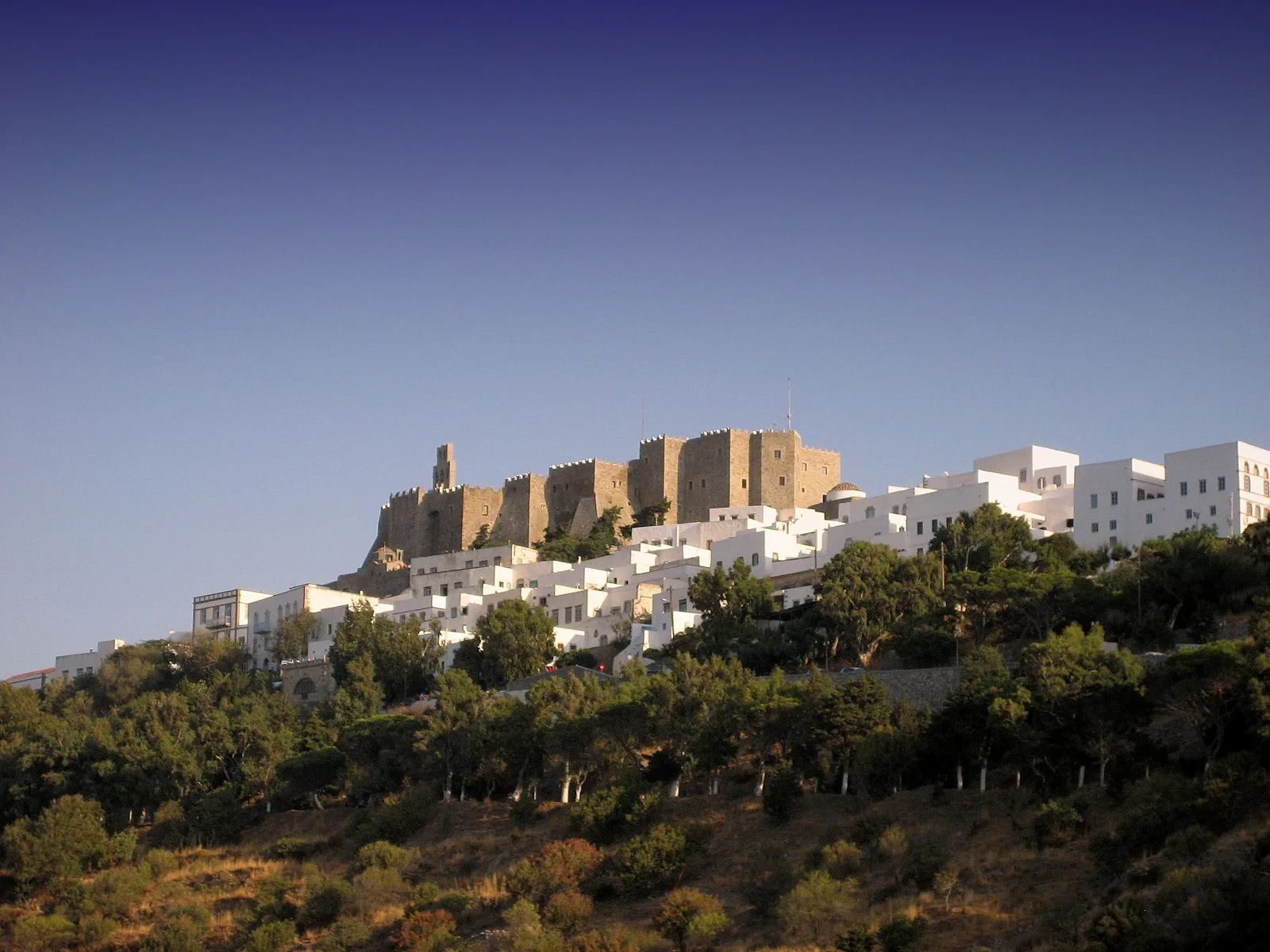
Patmos is where St John is said to have written the Book of Revelation. The fortified Monastery of St John and the Cave of the Apocalypse are UNESCO-listed, and the island has a calm, refined atmosphere.
Highlights
- Monastery of St John the Theologian
- Cave of the Apocalypse
- Chora's white mansions
- Psili Ammos beach
- Skala harbour
A Spiritual and Serene Haven
Patmos, often referred to as the Island of the Apocalypse, is a destination of profound historical and spiritual significance. Located in the northernmost part of the Dodecanese archipelago, it offers a sophisticated atmosphere that stands apart from the more boisterous islands nearby. The island is best known as the site where Saint John the Theologian lived in exile and penned the Book of Revelation. This rich religious heritage is preserved today through the imposing Monastery of Saint John the Theologian, a fortified structure that dominates the island's skyline, and the nearby Cave of the Apocalypse, where visitors can see the very crevices where the saint is said to have received his divine visions. Both sites are recognized as UNESCO World Heritage landmarks, drawing pilgrims and history enthusiasts from across the globe.
Chora and the Coastal Charm
Beyond its spiritual landmarks, Patmos is celebrated for its breathtaking architecture and tranquil beauty. The island’s capital, Chora, is a maze of whitewashed mansions, narrow alleyways, and hidden courtyards that cascade down the hillside beneath the monastery. It is a place of refined elegance, where the traditional Aegean style meets a quiet, contemplative lifestyle. Down at the coastline, Skala serves as the main port and the island's bustling hub. While Skala offers a variety of amenities and dining options, the true allure of Patmos lies in its natural surroundings. Visitors looking to escape the crowds often head to Psili Ammos, a stunning beach accessible by boat or a scenic hike, known for its soft golden sand and crystal-clear waters. Whether you are wandering through the labyrinthine streets of the hilltop capital or relaxing by the Aegean Sea, the island maintains a unique, dignified pace that invites deep relaxation and cultural discovery.

☀️ Best time to visit
Months from May to June and September to October are ideal for visiting Patmos. During these periods, the weather is pleasantly warm, perfect for exploring the steep paths of Chora and visiting the monastery without the intense heat of mid-summer. The island remains peaceful, allowing visitors to fully appreciate its spiritual atmosphere and scenic beauty in comfortable temperatures.
🧭 Getting there & around
Patmos does not have its own airport. The most common way to reach the island is by flying into Kos International Airport (KGS) and taking a connecting ferry from the port of Kos. Alternatively, high-speed catamarans and conventional ferries connect Patmos regularly with Piraeus, the main port of Athens. These sea routes are well-established, though travelers should plan their journey according to seasonal ferry schedules to ensure smooth transitions between the mainland or nearby islands.
Plan your trip to Patmos
Compare prices with KAYAKYou'll be taken to KAYAK to compare prices. We may earn a commission at no extra cost to you.
Plan your trip to Patmos
🏨Find hotels on Booking.comBooking.comAffiliate links — we may earn a small commission.
Deals from our travel partners
 Aris Thessaloniki vs Rostock Tickets - Nick Galis Hall, 2026-12-22Sports Events 365 · from 102 EUR
PAOK Thessaloniki vs Balkan Botevgrad Tickets - PAOK Arena, 2027-01-13Sports Events 365 · from 102 EUR
Olympiacos Pireus vs Kirolbet Baskonia Vitoria Tickets - Peace & Friendship Stadium, 2027…Sports Events 365 · from 120 EUR
OFI Crete vs RSC Anderlecht Tickets - Pankritio Stadium, 2026-11-26Sports Events 365 · from 130 EUR
Aris Thessaloniki vs Rostock Tickets - Nick Galis Hall, 2026-12-22Sports Events 365 · from 102 EUR
PAOK Thessaloniki vs Balkan Botevgrad Tickets - PAOK Arena, 2027-01-13Sports Events 365 · from 102 EUR
Olympiacos Pireus vs Kirolbet Baskonia Vitoria Tickets - Peace & Friendship Stadium, 2027…Sports Events 365 · from 120 EUR
OFI Crete vs RSC Anderlecht Tickets - Pankritio Stadium, 2026-11-26Sports Events 365 · from 130 EUR
Affiliate links — we may earn a commission at no extra cost to you.
Patmos guides & articles
The Best Beaches in and Around Patmos
Patmos offers a diverse coastline of quiet coves and expansive bays. This guide highlights the best beaches to visit while exploring this spiritual Dodecanese island.
What to Eat in Patmos: A Local Food Guide
Patmos, a Dodecanese island steeped in history and tranquility, offers a culinary journey as refined as its atmosphere. Beyond its famous monasteries and quiet beaches, the island boasts a distinct local cuisine shaped by tradition and the bounty of the Aegean.
